


 English
 中文简体

 Home / News / Industry News / Best Office Safe Buying Guide: Capacity, Fire Rating, Locks, and Placement

Industry News
Best Office Safe Buying Guide: Capacity, Fire Rating, Locks, and Placement
2026-11-21
Ask five people what the best office safe is, and you will usually get five different answers. One person wants a fireproof box for contracts. Another needs quick access to cash deposits. A third has a tiny back office and no floor space to spare. After years of building safes and sheet metal enclosures, we have learned that the best office safe is not the biggest or the most expensive one. It is the one that matches what you store, who needs access, and where it can be properly fixed.
This guide walks through the decisions that matter most: capacity, fire protection, burglary resistance, lock type, placement, and daily use. It is written for small business owners, office managers, and home-office workers who want practical answers rather than a sales pitch.
Start With What You Need to Protect
Before comparing models, make a short list of contents. Documents such as contracts, deeds, insurance papers, and tax records have different needs from cash, keys, passports, backup drives, or prescription medicines. Paper is damaged by heat and water; electronic media is usually more sensitive to heat. Cash and small valuables need physical resistance and discretion. If several staff members need access, you also need a lock that can be managed without passing one key around.
It also helps to separate “must protect” from “nice to organize.” A safe is not a filing cabinet. If the main job is keeping folders tidy, a lockable cabinet may be enough. If the main job is protecting irreplaceable items or cash, choose a safe with the right fire rating and a body that can be anchored.
| Office need | Safe format to consider | Typical access | Installation note |
|---|---|---|---|
| Contracts, deeds, and passports | Compact home or office safe | Keypad or biometric | Bolt to floor or a strong shelf where possible |
| Cash deposits and petty cash | Small biometric or keypad safe | Biometric plus key backup | Keep out of public view and anchor securely |
| Shared staff access | Biometric home or office safe | Multi-user fingerprint or code | Decide who enrolls prints and changes codes |
| Limited floor space | Wall safe | Keypad, key, or biometric | Requires a suitable wall cavity and proper fixing |
Capacity and Interior Layout
Capacity is usually described in litres, but litres alone do not tell the whole story. A tall, narrow interior may not fit binders; a wide, shallow interior may waste space. Measure the largest item you plan to store, then add room for shelves, a cash tray, and air circulation. For a small office, a 40L safe is often enough for documents, passports, and a cash pouch. Our BS0142 40L biometric home safe is one example of that compact format.
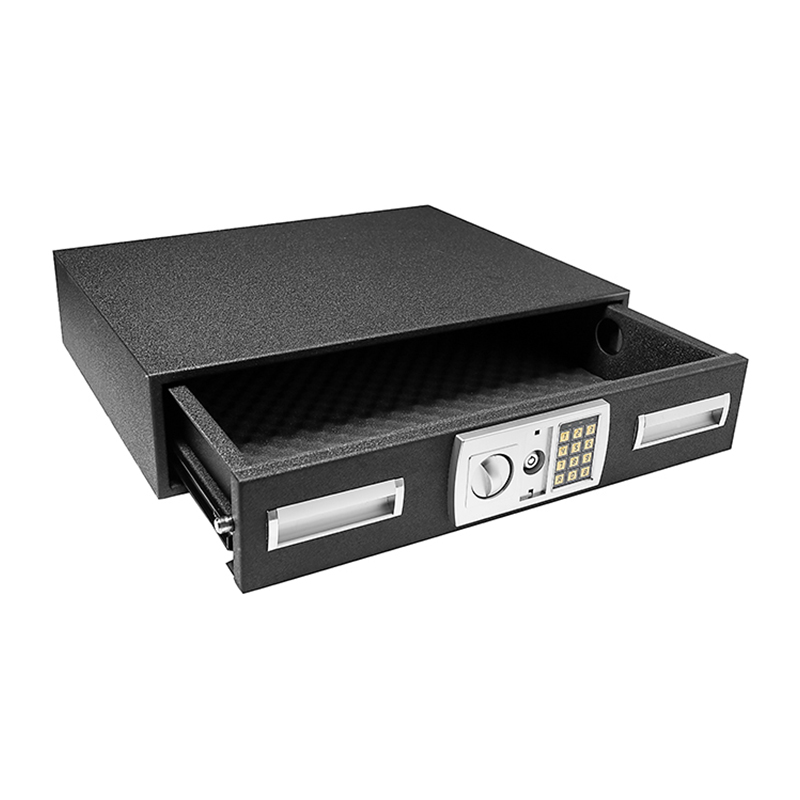 BS0142 40L Biometric Home SafeCompact 40L steel safe with fingerprint, passcode, and key access; fits small-office document and cash storage needs.View Product →
If you expect to add backup drives, legal folders, or a second cash box, move up to a 48L model or check the interior layout carefully. Door pockets and adjustable shelves can make a small safe more usable, but they also reduce the clear opening. Always compare internal dimensions, not just the outside size.
Fire Protection, Burglary Resistance, and Real-World Construction
Fire ratings are expressed in minutes, such as 30, 60, or 90 minutes. The rating should match the contents and the likely fire load around the safe. Paper needs a lower threshold than backup drives, but media protection is not automatic. If you store USB drives or external hard disks, look for a safe that specifically states media protection. Water resistance is also worth checking, especially if the office has sprinklers or is in a basement.
Burglary resistance is a separate question. A safe can be fireproof and still be easy to carry away if it is not anchored. Look at door thickness, locking bolts, pry resistance, and the quality of the body seams. The way a body is cut, bent, welded, and finished affects door alignment and long-term strength; sheet metal processing technology can enhance product consistency. A sensible office safe should be fixed to the floor or wall, or set into a prepared cavity, unless it is too heavy to move.
Locks and Access: Who Needs to Get In, and How Often?
Locks are where daily frustration often starts. Mechanical keys are simple and reliable, but they can be copied or lost. Keypads allow codes to be changed and shared, but staff may forget them. Biometric locks remove the key handover problem, yet fingerprint quality varies between users and can be affected by moisture or small cuts. A good compromise is a biometric lock with a keypad and a mechanical override.
For shared offices, decide who will enroll fingerprints or set codes, how often codes will change, and what happens when someone leaves. Check battery life and whether the safe warns you before the battery fails. If the safe is used several times a day, a quick-access format matters more than a large interior. Our BS0150 48L biometric home safe is one example of a larger biometric format for offices that need a bit more room.
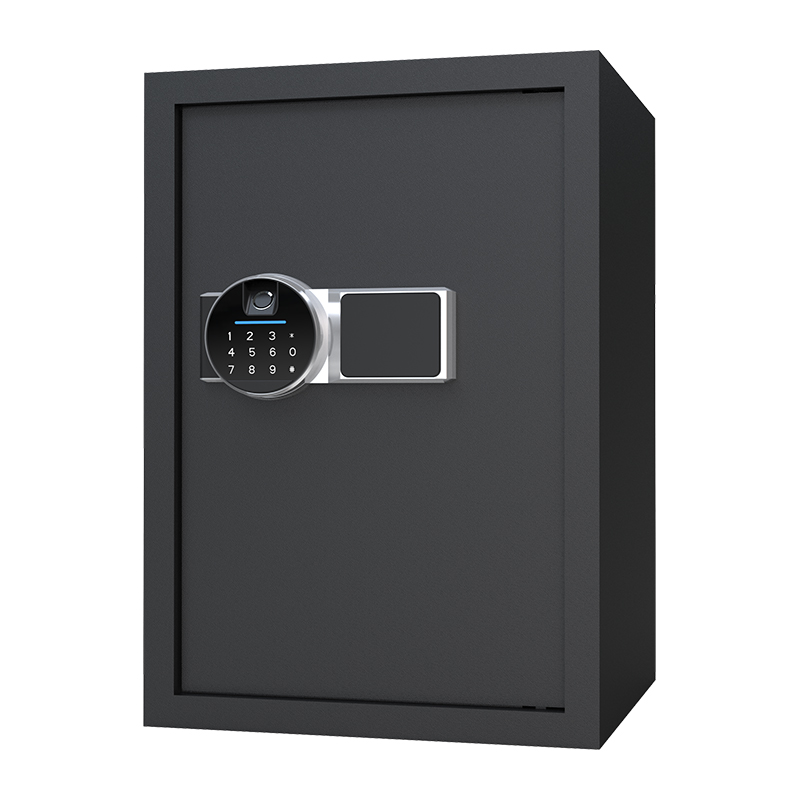 BS0150 48L Biometric Home SafeLarger 48L biometric safe with fingerprint, passcode, and key access; offers more room for shared-office valuables and documents.View Product →
Ask whether the model keeps an access record. Not every office safe does, and it is not always necessary, but it can be useful if cash or controlled items are stored.
Placement, Anchoring, and Discretion
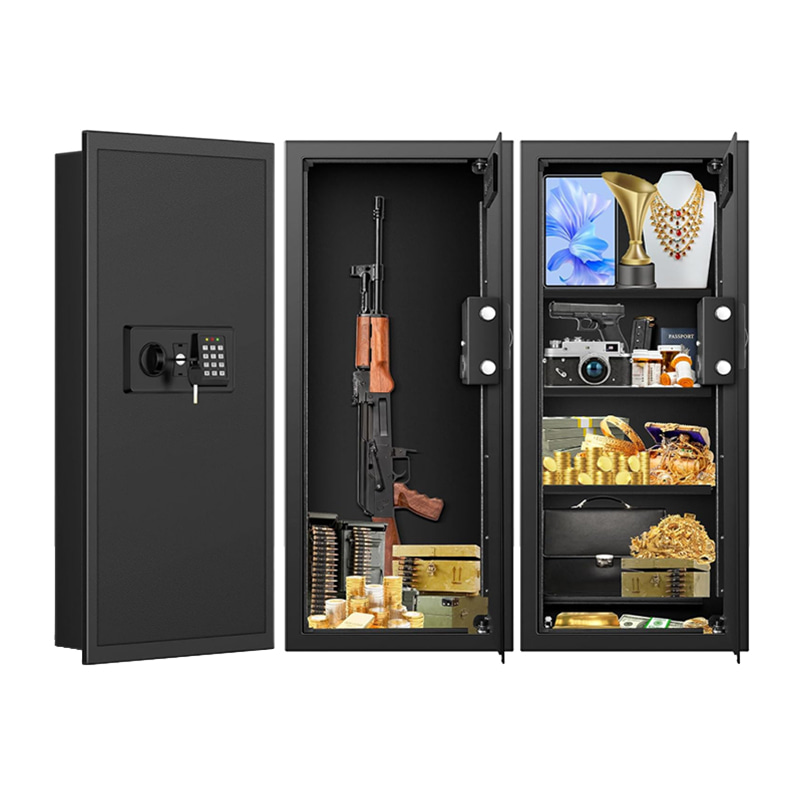
Placement affects both security and usability. A safe hidden behind a desk is more discreet than one beside the front door, but it still needs to be fixed. Think about lifting, door swing, and whether staff can open the safe without moving furniture. If floor space is tight, a wall safe can be a good fit. Our WS0356 560mm inwall safe is designed for a prepared wall cavity, and it keeps documents out of the general storage flow.
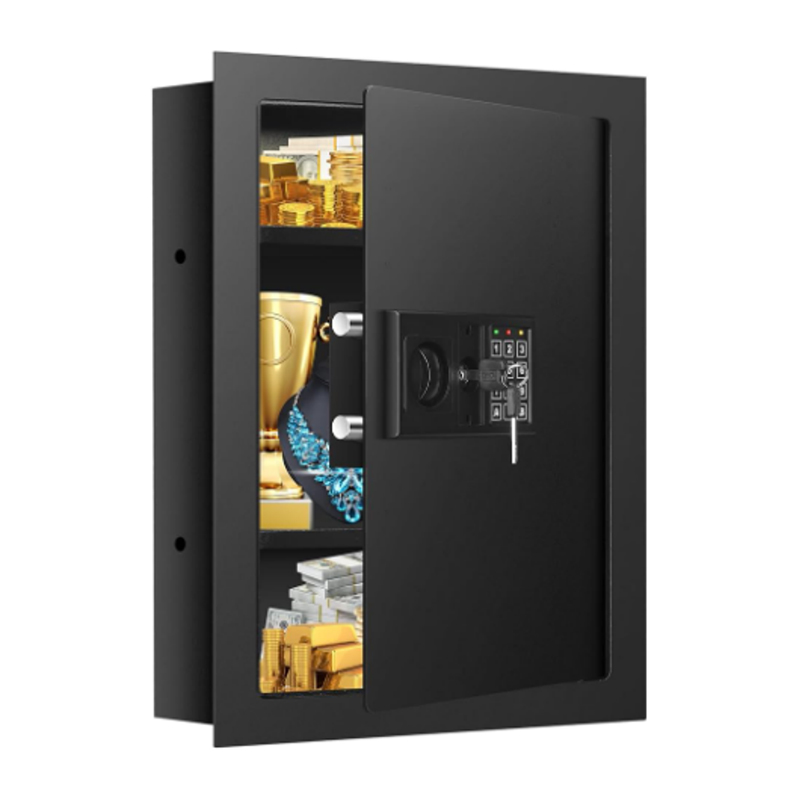 WS0356 560mm Space-Saving In-Wall SafeWall-mounted steel safe with fingerprint, passcode, and key access; saves floor space while concealing documents and valuables in a prepared cavity.View Product →
Wall safes need a suitable wall, correct cavity depth, and proper fixing. Do not assume every stud wall is strong enough. A competent installer should check the structure and maintain fire separation where required. In damp rooms, add a rechargeable dehumidifier or a moisture-absorbing pack, and check it regularly.
Daily Use, Maintenance, and Small Details That Matter
A safe only works well if people use it properly. Keep an inventory of what is inside, review it quarterly, and remove items that no longer belong. Store documents in labelled folders so you are not shuffling papers at the door. Keep a spare key or override in a secure off-site location, not in the desk drawer. Test the lock and the alarm, if fitted, on a regular schedule.
If your office has unusual requirements, such as a non-standard size, a specific finish, or a custom interior, it is worth discussing early. Custom safe solutions can be more practical than forcing a standard model into a difficult space, but the lead time and cost need to be clear from the start.
A Practical Checklist Before You Buy
- Measure the largest item and the clear internal opening.
- Match the fire rating to paper, media, or both.
- Confirm the lock type, override, and battery access.
- Plan how the safe will be anchored and by whom.
- Decide who enrolls fingerprints or changes codes.
- Check the warranty, spare parts, and service support.
- Ask for test certificates or written specifications where available.
The best office safe is not a status symbol. It is a quiet piece of equipment that protects the things you cannot replace and fits the way your office actually works. Start with the contents, choose the right lock and fire protection, fix it properly, and review the setup once a year. That approach will serve you better than any single “best” label.
-

Arnostanley Electric is committed to providing customers with home security OEM and ODM services, as well as comprehensive professional solutions.
-
Product List
Pistol Safe Lock Box Gun Cabinet Home Safe Safe Accessories Product Customization -
Contact Info.
+86-(0)574-6248 327+86-180 6720 2630Lucas_zhu@arnostanley.comNo.16 Beixing East Road, Yuyao City, Zhejiang Province, China -
Follow Us
Copyright © 2025 Ningbo Arnostanley Electric Co., Ltd. ALL Rights Reserved.
Custom Secure Storage Solutions Suppliers
