


 English
 中文简体

 Home / News / Industry News / custom fireproof safe: Applications, Selection Criteria, and Practical Guidance

Industry News
custom fireproof safe: Applications, Selection Criteria, and Practical Guidance
2026-11-04
A custom fireproof safe is rarely a catalog choice. It is a set of decisions about what you protect, how often you need access, where the safe will sit, and what evidence proves the protection. From our workshop in Ningbo, we build safes and sheet metal enclosures for buyers who need both fire resistance and practical customization. Good projects begin with a clear brief.
What Makes a Safe Truly Fireproof?
The word fireproof is used loosely. A fire-rated safe is designed to keep the internal temperature below a specified limit for a stated period while the outside is exposed to fire. The rating should be tied to a test standard, a laboratory report, and a defined contents category. Paper documents, digital media, photographs, and electronics do not tolerate the same conditions.
- Insulation package: gypsum-based, ceramic fiber, or composite boards, chosen for thickness, weight, and internal temperature control.
- Door seal: an intumescent gasket expands under heat, and its fit matters as much as the steel.
- Body and door: steel gauge supports structure and impact resistance, but steel alone does not make a safe fire-resistant.
- Lock protection: relockers and boltwork address security, not fire performance.
No safe is fireproof in an absolute sense. Match the rating to the likely fire exposure and the contents. If a supplier cannot explain the rating basis, treat the label as decoration.
Start With the Contents, Not the Catalog
When a buyer asks for a custom fireproof safe, we first ask for a contents list. Documents need different space from jewelry, passports, cash, or firearms. A document safe may need shallow shelves for folders; a firearm safe needs barrel rests, clearance for optics, and an easy door opening. The same outside dimensions can produce very different interiors.
We also ask how often the safe will be opened, who manages access, and whether the room is humid, dusty, or prone to temperature swings. A safe that is difficult to use tends to stay open, which defeats its purpose.
How Custom Fireproof Safe Construction Comes Together
Custom work is a sequence of controlled decisions. Steel is cut, bent, welded, and finished; insulation and seal are fitted; the door is aligned; the lock and interior are installed; then the unit is inspected and packed. Keeping these steps close together makes it easier to correct a door gap or shelf fit before the safe leaves the factory. Our own production includes laser cutting, CNC forming, welding, phosphating, painting, and assembly.
This attention to process control is one reason we keep sheet metal work in-house; our team has written about how sheet metal processing technology can enhance product consistency. For a fire-rated safe, consistency is not cosmetic. A door that closes smoothly but not tightly enough can let hot gases pass through a gap, and an insulation panel compressed unevenly can create a weak point.
| Rating band | Typical use | What to confirm |
|---|---|---|
| 30-minute | Documents and valuables in lower-risk home settings | Test standard, internal temperature limit, seal condition |
| 60-minute | Home or office storage with a higher fire exposure | Independent report, door alignment, replacement seal availability |
| 90-120 minute | Commercial records or archival storage | Full test evidence, anchoring, humidity control |
Details that deserve a second look
Pay attention to seal compression, hinge adjustment, and interior lining. A custom interior should not block the door seal or interfere with the lock. If the safe will be anchored, design the mounting points into the body rather than adding them later. Confirm how the finish will hold up in a garage, basement, or coastal environment.
Security and Access Options for a Custom Safe
Fire protection and security are separate engineering problems. We help buyers choose mechanical combination locks, digital keypads, or biometric access based on who uses the safe and how often. A biometric lock can be convenient, but battery life, finger conditions, and backup access all matter.
- Single or dual access for one user or multiple authorized users.
- Audit and override options for dealers, clubs, and commercial sites.
- Relocking, boltwork, anchoring, and floor loading for heavy custom units.
The right lock matches the operating routine. A safe that is awkward to open invites shortcuts.
Interior Layouts and Real-World Use
Interior customization can be simple or extensive: adjustable shelves, drawers, door organizers, rifle racks, pistol racks, document trays, lighting, and dehumidification. The goal is to organize contents without compromising the safe's rated performance. Avoid sharp edges, loose linings, and layouts that make the door seal work harder.
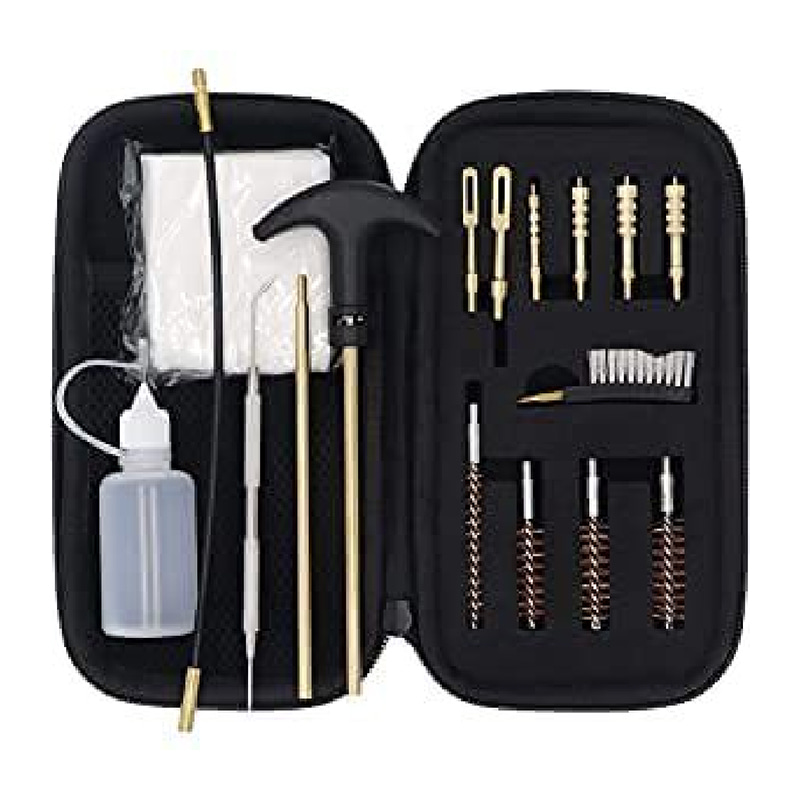
For long-term storage, humidity control is often overlooked. A rechargeable dehumidifier or dehumidifier bag can help, but the safe still needs a sensible location and a door that seals correctly. Cleaning kits and racks also keep firearms separated and reduce unnecessary contact.
When Fire Protection Meets Firearm Storage
Fireproof gun safes show why customization matters. A collector, club, or dealer may need capacity for 16, 24, 36, or more long guns, but the internal layout also has to accommodate optics, slings, and access frequency. The fire rating must cover the contents and expected exposure, not just the word fireproof on the door.
A proven platform can shorten development. Our 24-gun fireproof gun safe is one starting point for buyers who need a larger cabinet and want to discuss interior changes, lock options, or branding.
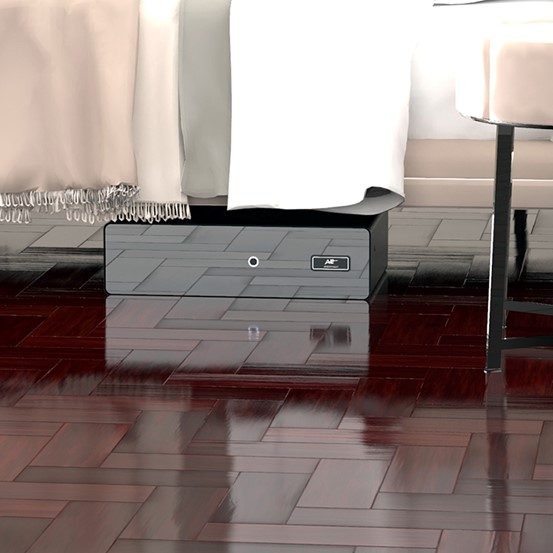 FS0124 24-Gun Fireproof Gun Safe PlatformA proven platform for larger cabinets, with adjustable interior and OEM/ODM support for lock, branding, and interior changes.View Product →
OEM and ODM: Turning a Spec Into a Repeatable Product
For distributors and brand owners, a custom fireproof safe is often an OEM or ODM project. Work begins with a brief: target market, contents, fire rating, dimensions, lock, interior, finish, packaging, and documentation. We translate that brief into drawings, samples, and production checks. Clear approval points matter more than a long feature list.
Some changes are straightforward, such as shelf layout, logo placement, packaging, or powder-coat color. Others affect the fire rating and should not be treated as cosmetic; a new insulation thickness, door seal, or body construction may need fresh validation. A responsible supplier will say which changes are low-risk and which require testing.
 OEM Sheet Metal Design and Custom Fabrication ServicesReview OEM design and sheet metal fabrication capabilities for custom safe changes, from concept and DFM to prototyping and production.View Product →
A Practical Buyer's Checklist
Before requesting a quote for a custom fireproof safe, prepare a short technical brief. The answers shape cost, tooling, and lead time.
- What will be stored, and what internal temperature limit does it need?
- What fire rating and test evidence are required for your market?
- Which outside and inside dimensions are fixed, and which are flexible?
- Which lock and access method fits daily use?
- How will the safe be anchored, loaded, and moved?
- What interior fittings, lighting, or dehumidification are needed?
- What finish, branding, packaging, documentation, and quantity should the factory plan for?
A good custom safe is not the one with the longest feature list. It is the one that protects the contents, fits the location, and can be built consistently. Bring the contents list, dimensions, and expected use; we can tell you which parts are routine and which need engineering attention.
-

Arnostanley Electric is committed to providing customers with home security OEM and ODM services, as well as comprehensive professional solutions.
-
Product List
Pistol Safe Lock Box Gun Cabinet Home Safe Safe Accessories Product Customization -
Contact Info.
+86-(0)574-6248 327+86-180 6720 2630Lucas_zhu@arnostanley.comNo.16 Beixing East Road, Yuyao City, Zhejiang Province, China -
Follow Us
Copyright © 2025 Ningbo Arnostanley Electric Co., Ltd. ALL Rights Reserved.
Custom Secure Storage Solutions Suppliers
