


 English
 中文简体

 Home / News / Industry News / How to Choose the Best Fireproof Home Safes: Fire Ratings, Size & Locks

Industry News
How to Choose the Best Fireproof Home Safes: Fire Ratings, Size & Locks
2026-10-16
Choosing the best fireproof home safe comes down to three numbers rather than a brand name: how hot the fire gets, how long it burns, and how much you need to protect. We manufacture home safes and steel enclosures in Ningbo, China, and we spend a surprising share of our week explaining to buyers why two boxes that look identical on a showroom floor can behave very differently in a real house fire. This guide covers the specifications that genuinely matter, in plain language, so you can compare products on facts instead of marketing claims.
What a Fire Rating on a Safe Actually Means
Fire ratings on residential safes usually follow UL 72, the standard for record protection equipment. A rating tells you two things at once: how long the container was held inside a furnace, and how hot the interior became while the outside was burning. A label reading "Class 350, one hour" means the inside stayed below 350 degrees Fahrenheit, roughly 177 degrees Celsius, for a full hour of testing. That ceiling matters because paper begins to scorch, curl, and turn brittle far below the temperatures a room fire reaches, and once a document is charred or a passport laminate has fused, the information is gone for good.
Media is a different problem. Photographs, negatives, tapes, and hard drives need a much cooler interior, which is why you also see Class 150 and Class 125 ratings. If your most precious items are not paper, a document-rated safe is not automatically the right answer.
Duration, impact, and the numbers behind the label
You will see half-hour, one-hour, two-hour, and longer ratings. A typical residential fire passes through flashover, the moment when everything in a room ignites at once and temperatures climb past 1,100 degrees Fahrenheit, and then the fire either burns out or is extinguished. A one-hour rating covers most house fires from ignition to knockdown, while a two-hour rating buys margin for a slow basement fire or a delayed response. Some UL 72 tests also heat the safe and then drop it onto rubble before reheating it, because fire-damaged buildings collapse. A safe that survives the heat but springs open on impact is not protecting anything.
How to Compare Fireproof Home Safes Side by Side
Once the rating is clear, the rest of the decision is comparison shopping. The seven points below are the ones that separate a safe you will still be happy with in ten years from one you regret by the second month.
| What to compare | Why it matters | What to look for |
|---|---|---|
| Fire rating | Sets the interior temperature and the time window | UL 72 Class 350 for paper; Class 125 or 150 for media |
| Interior volume and layout | Litres say nothing about whether a folder actually fits | Measure interior height and shelf spacing against your items |
| Body and door construction | Steel thickness, seams, and door fit drive rigidity and heat transfer | Continuous welded seams and a recessed or stepped door |
| Locking and access | Daily convenience decides whether the safe is actually used | Biometric, digital keypad, or key lock with a backup |
| Door sealing | Intumescent seals expand in heat and also slow smoke and water | A gasket running the full perimeter of the door |
| Humidity control | Moisture rusts metal and warps paper even without a fire | Room for a desiccant or a rechargeable dehumidifier |
| Anchoring | Carrying a safe away is far easier than breaking into it | Pre-drilled bolt holes and a floor or wall mounting kit |
We build our own enclosures, so we have a bias here: construction quality is usually visible only up close. If you want a deeper look at how cutting, bending, and welding tolerances affect a finished steel product, our engineers wrote a practical breakdown of how sheet metal processing affects product consistency. It is written with manufacturers in mind, but it explains why two safes with identical ratings can feel completely different the moment you close the door.
Size: The Specification Most Buyers Get Wrong
Most buyers underestimate how quickly a small safe fills up. A 40-litre interior comfortably holds a stack of A4 folders, passports, a jewellery tray, and a small box of family items, but add a birth certificate wallet, a camera, and a spare set of keys and the shelves are full. A 48-litre cabinet gives you a second shelf and room to grow, which sounds trivial until you are repacking the same box every spring.
Two measurements matter more than the advertised volume: the interior height between shelves, and the exterior footprint. Check that the tallest item you plan to store fits upright, and confirm the safe passes through the doorway and the stairwell on the way to its final position. Fireproof safes are heavy by design, and moving one twice is a punishment nobody deserves. As a rule, choose the largest interior that still fits your space and budget, then anchor it where it will not be in the way.
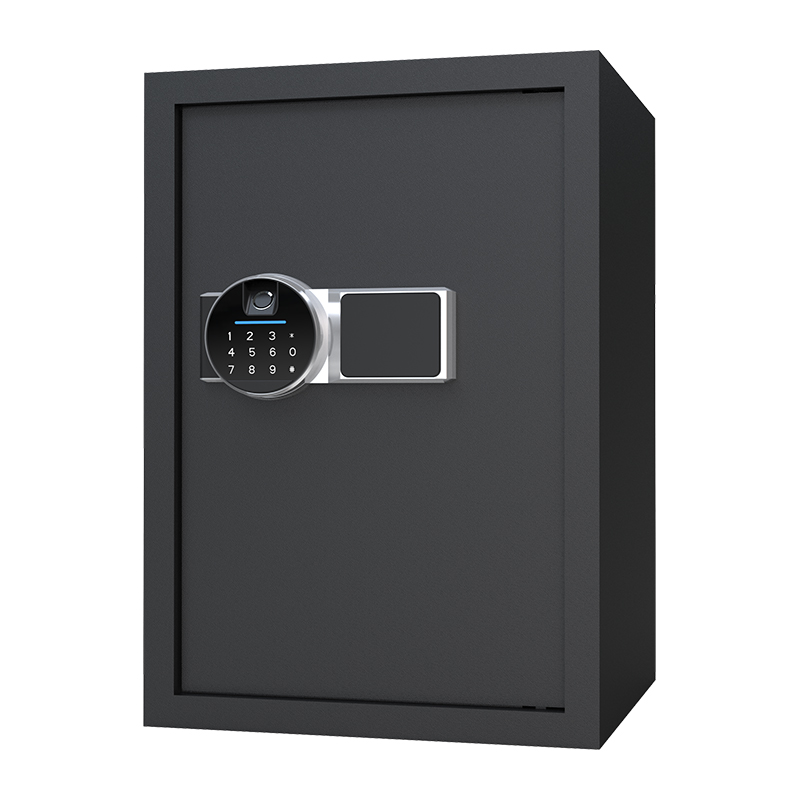 BS0150 48L Biometric Home Safe with Keypad and KeyA 48L home safe with fingerprint, passcode, and key access, offering multiple entry options for households weighing biometric speed against backup access.View Product →
Locks: Biometric, Keypad, or Key
Lock choice is a usability decision disguised as a security decision. Biometric locks are fast and excellent for one or two regular users, but they depend on battery health and on clean, well-registered fingerprints. A keypad is slower but works for guests, contractors, and family members who should not be enrolled. A key lock never needs a battery but gives you one more thing to lose. What matters technically is that the lock is a genuine, replaceable component rather than a sealed module that turns the whole safe into scrap if it fails.
For most homes, a biometric safe with a mechanical key override and an external power point covers the realistic failure cases: dead batteries, a cold or damp finger, and the one evening the sensor refuses to cooperate. If two adults will open the same safe several times a day, biometrics save real time. If it will be opened once a month, a keypad or a key lock is simpler and lasts longer.
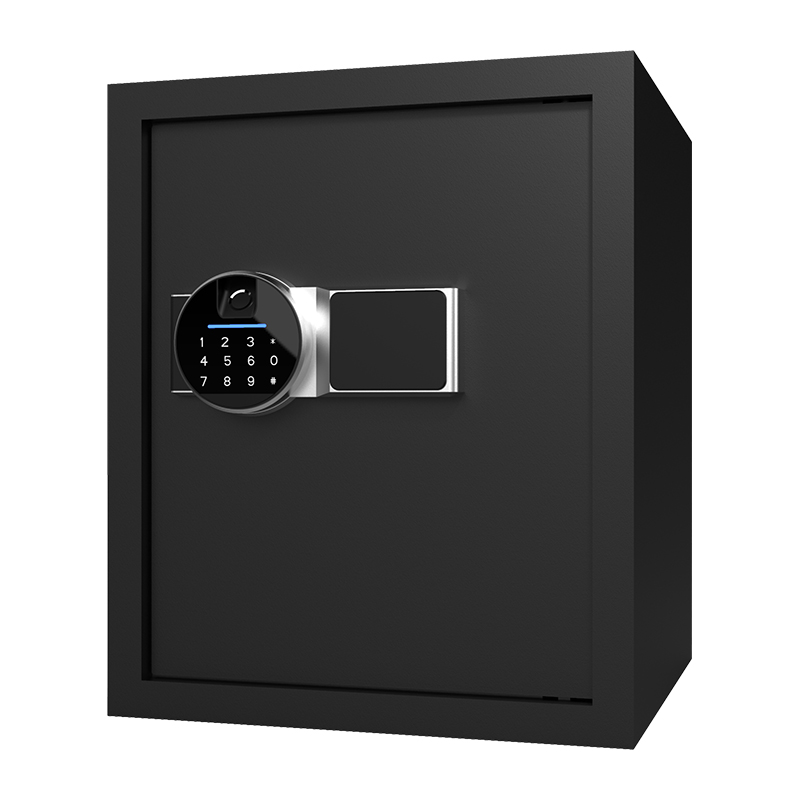 BS0142 40L Biometric Home Safe with Dual AlarmA 40L biometric safe with adjustable shelf, internal lighting, and multiple unlock methods, suited to frequent home or office access with key and passcode backups.View Product →
When Your Valuables Include Long Guns
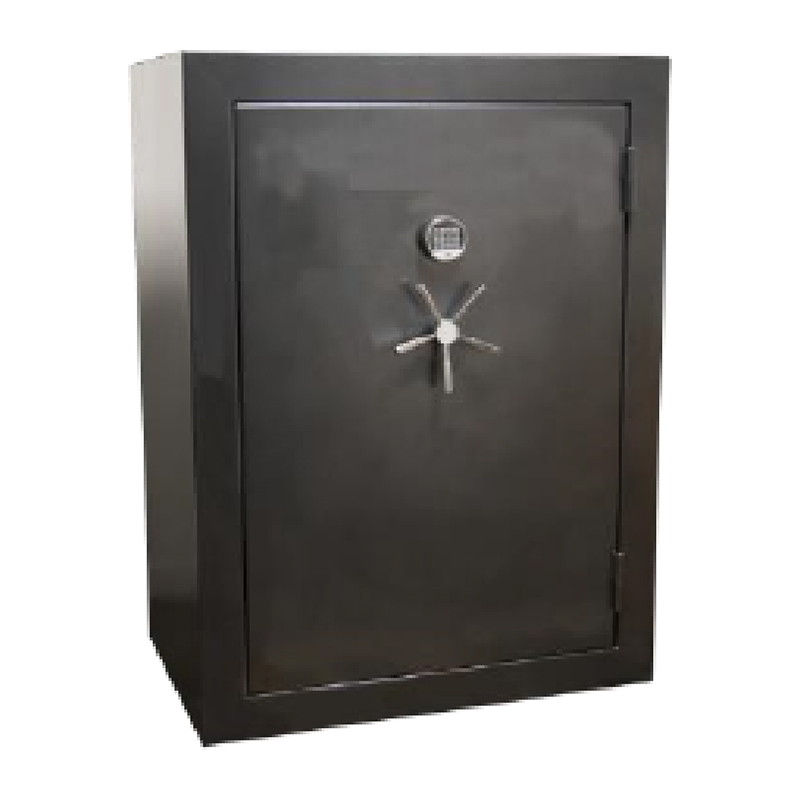
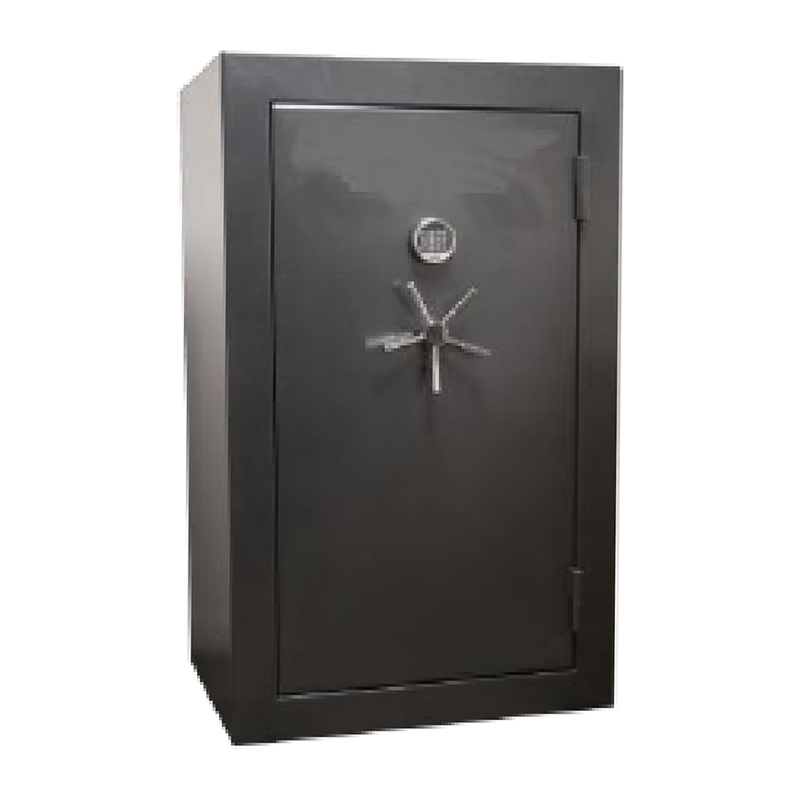
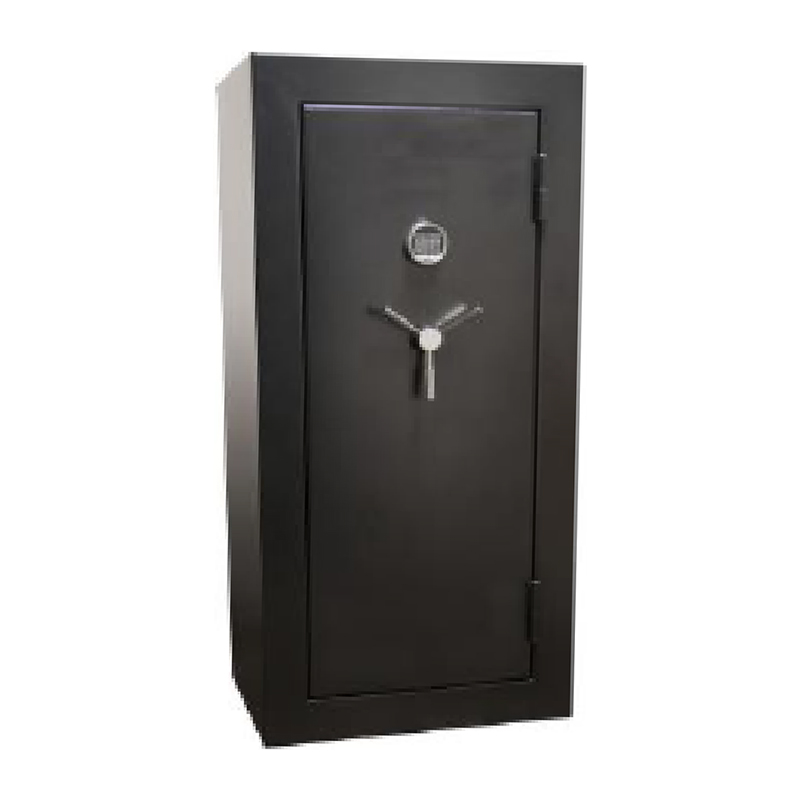
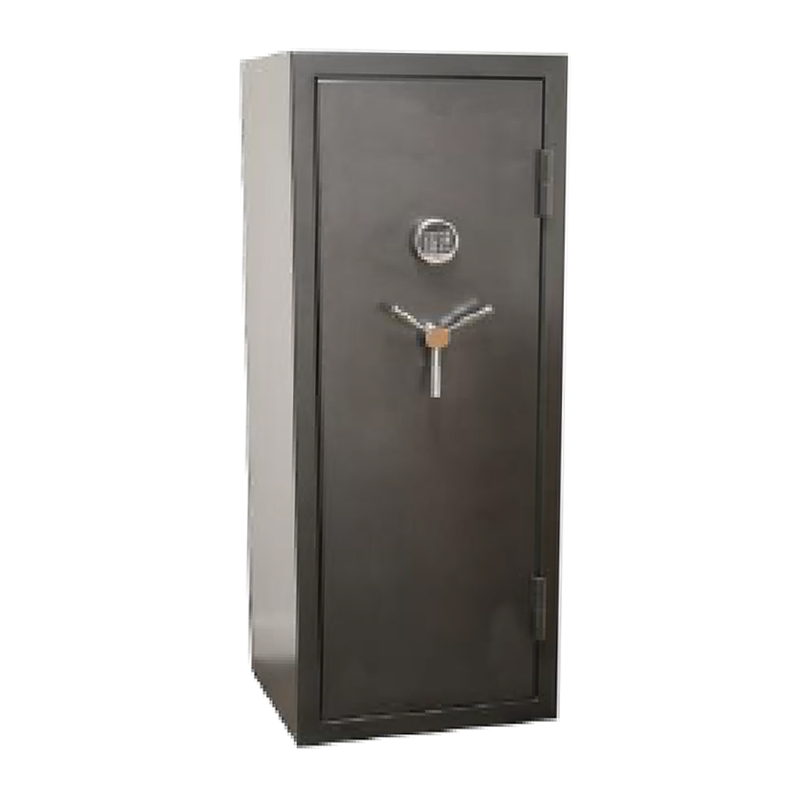
Some households need more than a document safe. Hunters, sport shooters, and collectors often keep long guns, ammunition, and paperwork in the same room, and a fireproof gun safe solves several problems at once: it keeps firearms out of unauthorized hands, and it protects the contents from heat long enough for a fire to be brought under control. Capacity is measured in long-gun slots, and the honest figure is often lower than the advertised number once scopes, slings, and shelf dividers are taken into account.
Look for the same fundamentals as a document safe: a rated fire lining, a reinforced door with active bolts on the hinge side, and internal provision for humidity control. A gun safe without a dehumidifier strategy is a rust problem waiting for its first autumn.
 FS0116 16-Gun Fireproof Safe with 45-Minute Fire RatingA 16-gun fireproof safe with reinforced door, live bolts, carpet-lined adjustable interior, and 45-minute fire rating for firearms and valuables.View Product →
Placement and Installation Decide the Outcome
Where a safe sits changes how long it survives. A fire reaches an attached garage or a basement storeroom differently than it reaches a bedroom closet, and water damage usually follows the fire department rather than the flames.
- Ground floor or basement, against an exterior wall if possible: heat and smoke arrive later than in an upper hallway, and the safe is easier to bolt down.
- Bolted to concrete: four anchor bolts into a slab make removal impractical, while a safe sitting loose on carpet is a carrying job rather than a cracking job.
- Away from the obvious: nightstand safes are attractive to burglars and sit close to where bedroom fires often start.
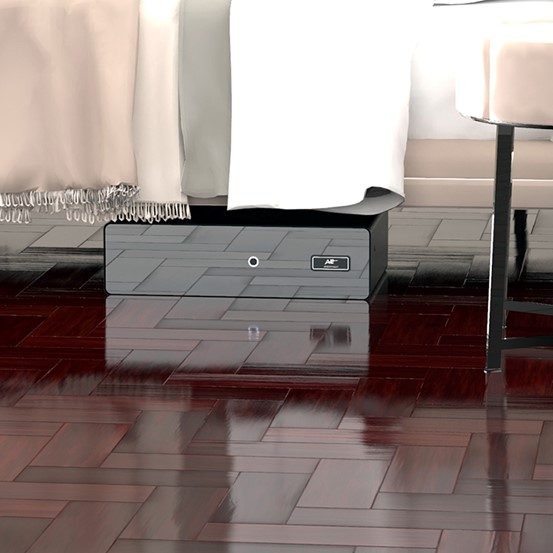
- Consider in-wall and underbed options: an in-wall safe uses the wall cavity, sits flush, and is hard to wrap a strap around, while an underbed model keeps valuables out of sight without taking floor space.
- Leave some air around the box: a safe crammed into a sealed cupboard bakes faster than one with a little clearance.
Five Mistakes We See Buyers Make
After a few thousand conversations with buyers, the same mistakes keep coming up.
- Trusting the word "fireproof" without a rating. "Fireproof" is a marketing word; a UL 72 class and duration is a specification.
- Buying by exterior size. Two safes of the same outside dimensions can have very different interior volumes once the fire lining is accounted for.
- Ignoring humidity. A safe that keeps heat out still traps moisture in.
- Skipping the anchor kit. The cheapest upgrade to real security is four bolts and twenty minutes.
- Forgetting the second key or the override code. We have all met the family who owns a very secure empty box.
A Short Buying Checklist
Before you order, run through this list once.
- Do you need paper protection, media protection, or both?
- How many minutes of fire resistance does your home realistically need?
- What are the interior dimensions of your tallest and widest items?
- Which lock type will every regular user actually operate?
- Where will the safe sit, and how will it be anchored?
- Who else needs a code, a key, or a fingerprint enrolled?
The best fireproof home safe is not the one with the longest feature list. It is the one with a rating you understand, an interior that fits what you own, a lock your household uses without friction, and an anchor that keeps it in place. Get those four things right, and everything else is detail.
-

Arnostanley Electric is committed to providing customers with home security OEM and ODM services, as well as comprehensive professional solutions.
-
Product List
Pistol Safe Lock Box Gun Cabinet Home Safe Safe Accessories Product Customization -
Contact Info.
+86-(0)574-6248 327+86-180 6720 2630Lucas_zhu@arnostanley.comNo.16 Beixing East Road, Yuyao City, Zhejiang Province, China -
Follow Us
Copyright © 2025 Ningbo Arnostanley Electric Co., Ltd. ALL Rights Reserved.
Custom Secure Storage Solutions Suppliers
