


 English
  中文简体
中文简体 
 Home / News / Industry News / Quick Access Rifle Safe: The Practical Guide to Fast-Access Gun Storage
Industry News
Quick Access Rifle Safe: The Practical Guide to Fast-Access Gun Storage
2026-08-19
A quick access rifle safe should open within three to five seconds of you reaching for it, hold the long guns you actually own, and resist anyone who does not know the code. If your cabinet takes longer, cannot be mounted near where you sleep, or flexes under a pry bar, it is not a quick access safe no matter what the label claims. Three requirements cover the entire buying decision:
- Speed: the safe opens in seconds, without a key and without complex steps.
- Fit: the interior actually accommodates your rifles, with their optics and barrel lengths.
- Security: the steel, welds, and lock mount delay any attacker long enough to matter.
This article walks through each one using the criteria we apply on the production floor of our own safe manufacturing plant.
What Counts as a Quick Access Rifle Safe
Quick access does not have a single industry standard, but the practical benchmark is consistent across security professionals: a trained adult should be able to open the safe and reach a rifle within three to five seconds. That rules out traditional combination dials and key locks, and it explains why most quick access designs use either a mechanical push-button lock, a digital keypad, or a biometric reader. Time yourself on the lock you already own. If you are fumbling with a key or spinning a dial for more than five seconds, the safe is a storage box, not a quick access unit.
Fit is the second defining factor. A rifle safe must accommodate the length of the firearm, which means an internal length of at least 1000 mm for most rifles, and more for shotguns or rifles with large optics. Internal width matters just as much because scoped rifles need extra clearance per slot. A cabinet rated for twelve guns may hold only six scoped rifles comfortably, so verify by measurement rather than by the number printed on the box.
Mounting is the third pillar. A quick access rifle safe that is not bolted down is a theft target, not a security product. Steel walls protect against curious children and smash-and-grab thieves only if the entire unit cannot be carried out of the house. Every safe in our current lineup, from lock boxes to fireproof gun cabinets, is pre-drilled for mounting in the back and bottom, and we recommend anchoring into wall studs, a concrete floor, or a solid floor plate.
Three Locking Mechanisms, Three Trade-offs
The lock is the heart of a quick access safe, and the three main options are not interchangeable. Biometric readers offer the fastest entry because they require no code entry at all. A quality capacitive fingerprint sensor reads in roughly one to two seconds, which is why biometrics dominate the bedside safe category. Digital keypads sit in the middle: four to six digits, two to four seconds to enter, and no concern about fingerprint sensor quirks, but they still depend on battery power. Mechanical push-button locks are the slowest at three to five seconds, but they never need batteries and cannot fail electronically. The table below summarizes the trade-offs.
| Comparison point | Biometric | Digital keypad | Mechanical push-button |
|---|---|---|---|
| Typical unlock time | 1 to 2 seconds | 2 to 4 seconds | 3 to 5 seconds |
| Needs power | Battery | Battery | None |
| Backup if battery fails | Backup key or 9V terminal | Backup key | Not applicable |
| Reliability in dirt or cold | Depends on sensor quality | Very good | Excellent |
| Best fit for | Fastest possible entry | Balanced everyday use | Maximum no-power reliability |
Choose based on your own tolerance for failure modes. A biometric lock is only as good as its sensor. Low-end sensors fail on dry, calloused, or dusty fingers, and a safe that does not open when the adrenaline is up is worse than no safe at all. With a digital keypad, check that the buttons are sealed and that the backup key slot is reachable from the outside when the door is closed. With a mechanical push-button lock, there is simply less to fail, which is why security professionals still trust them for safes that sit untouched for months and then need to open on the first attempt.
What Separates a Safe from a Sheet Metal Box
Once the lock is decided, the next question is how much steel stands between the contents and a crowbar. Steel gauge is the first specification to check. Budget safes often use 16-gauge sheet metal for the body and a thinner outer door, a barrier that a motivated person can peel open in minutes. For a rifle safe that serves as your primary accessible storage, 14-gauge body panels with a reinforced door are a far more realistic barrier, and 10- to 12-gauge steel is better still for the door and the lock mounting plate.
Examine the corners and the hinge area. A safe assembled with full welds and reinforced corners is significantly stronger than one using folded tabs and spot welds. In our own facility we run both construction types on different lines, and the difference is obvious when you cut one open: weld penetration, edge alignment, and how the hinge bolts are anchored into the frame. A safe door that sags or flexes after six months of use is not a design failure, it is a manufacturing failure.
Locking bolt count is the third spec to verify. One top bolt and one side bolt will stop a casual thief, but two or more bolts per side, engaging a proper strike plate, hold far longer against prying. Also check the door gap. A tight-fitting door gives a pry bar almost no leverage, while a sloppy gap invites the first attack. These details do not appear in marketing photos, but they determine whether the safe performs its job.
Mounting Locations That Make Quick Access Work
Where you place the safe is as important as the lock on it. A quick access safe in the garage is no help when you are upstairs in bed, so think about the two or three places you are most likely to be when you need the rifle, and choose a safe that fits one of those locations.
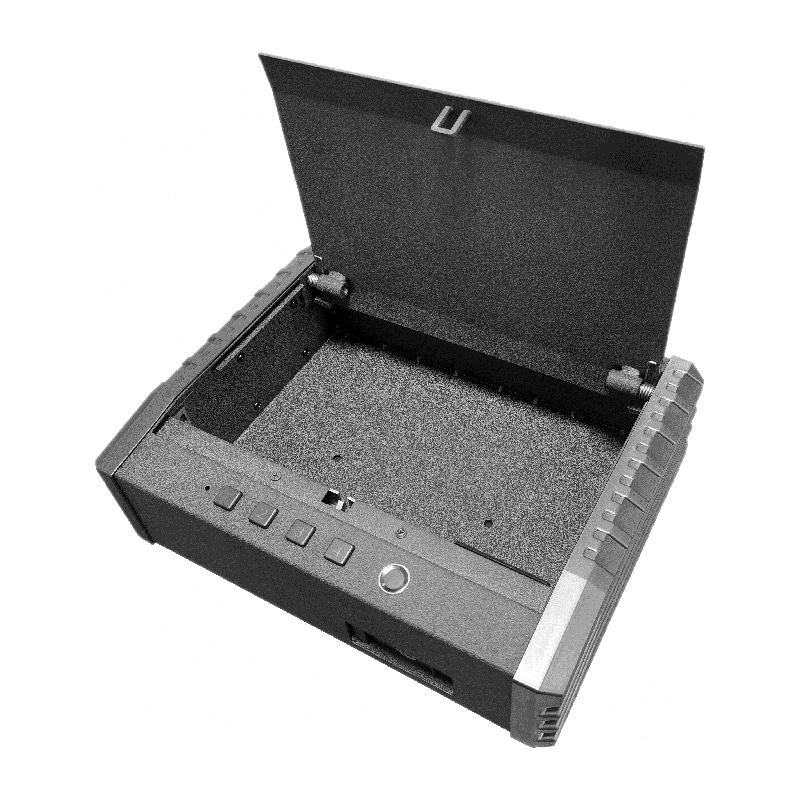
For a bedroom, an underbed safe turns otherwise wasted space into your fastest access point. Our XXL underbed safe is a wide, low-profile unit designed to slide under standard bed frames so that the rifle stays within arm's reach while you are in bed. You can anchor it through the bottom plate into the floor so that the entire bed would have to move before the safe does. This is one of the most practical quick access configurations we ship, especially for people who keep both a rifle and a pistol in the same room.
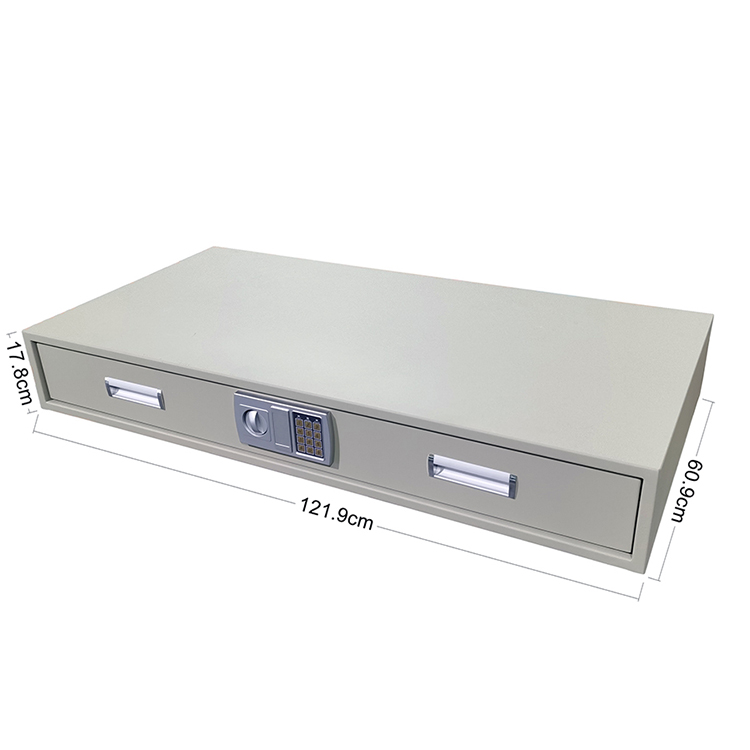 Custom BS0122 XXL Underbed Safe Suppliers, OEM/ODM Factory - Ningbo Arnostanley Ningbo Arnostanley Electric Co., Ltd. is China BS0122 XXL Underbed Safe Suppliers and OEM Factory, details:BS0122 XXL Underbed Safe is su...View Product →
For a discreet placement, a recessed in-wall rifle safe hides inside a closet or behind a panel and is anchored directly into the building structure, which makes it extremely difficult to remove. The catch is that you need a wall cavity deep enough to fit it, at least 150 to 200 mm for most long-gun models. Our 1100 mm in-wall gun safe is designed around a 1100 mm cavity, which fits most rifles and shotguns in standard hunting and defense configurations. Because the unit sits flush with the wall surface, it keeps the rifle close to the firing position when you pull it out from a hallway or home office.
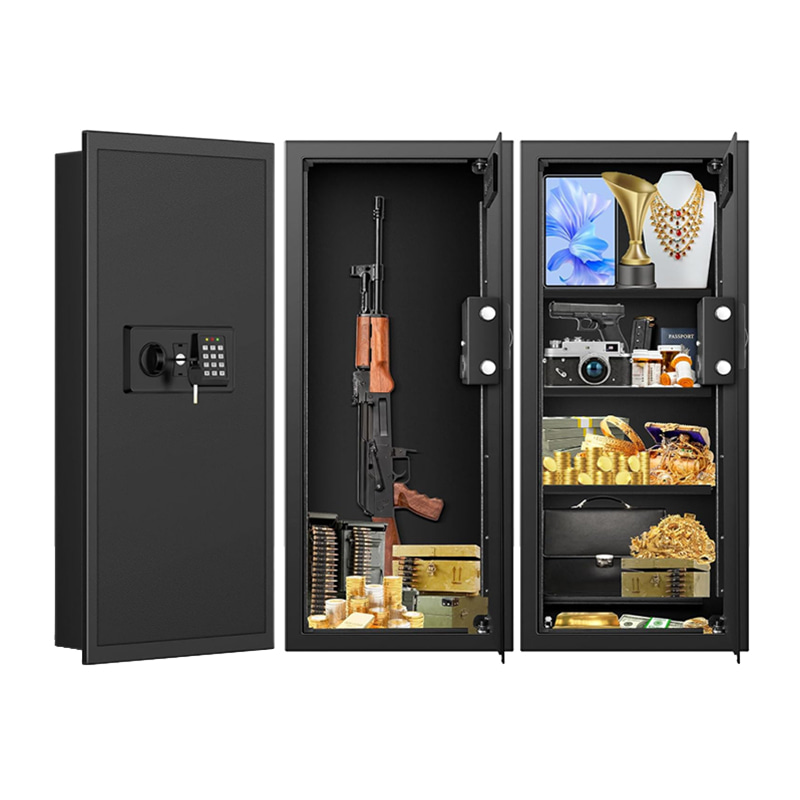 Custom WS0410 1100mm In-Wall Gun Safe Suppliers, OEM/ODM Factory - Ningbo ArnostNingbo Arnostanley Electric Co., Ltd. is China WS0410 1100mm In-Wall Gun Safe Suppliers and OEM Factory, details:The main features of the...View Product →
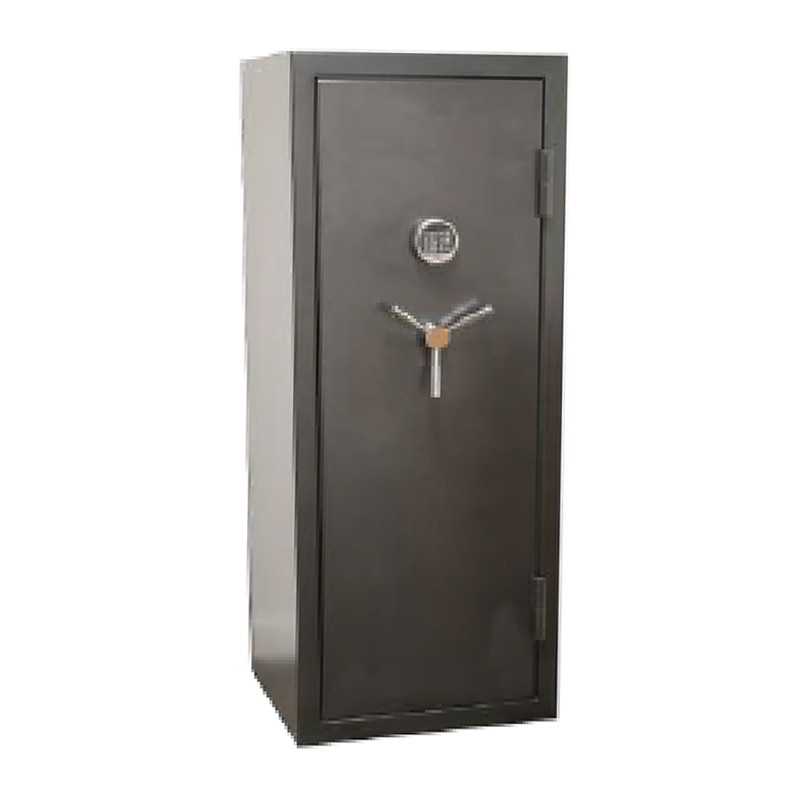
For those who prefer a free-standing option, a weld gun cabinet is the classic choice. A welded steel cabinet in a bedroom corner or a walk-in closet requires no wall cavity, holds the largest number of guns, and can still be anchored to the floor or the wall studs through pre-drilled holes. Our 12-gun weld gun cabinet provides a fully welded body and enough interior space for a dozen standard long guns, fewer if you mount large optics, which suits gun owners who need quick access and storage capacity in the same piece of furniture.
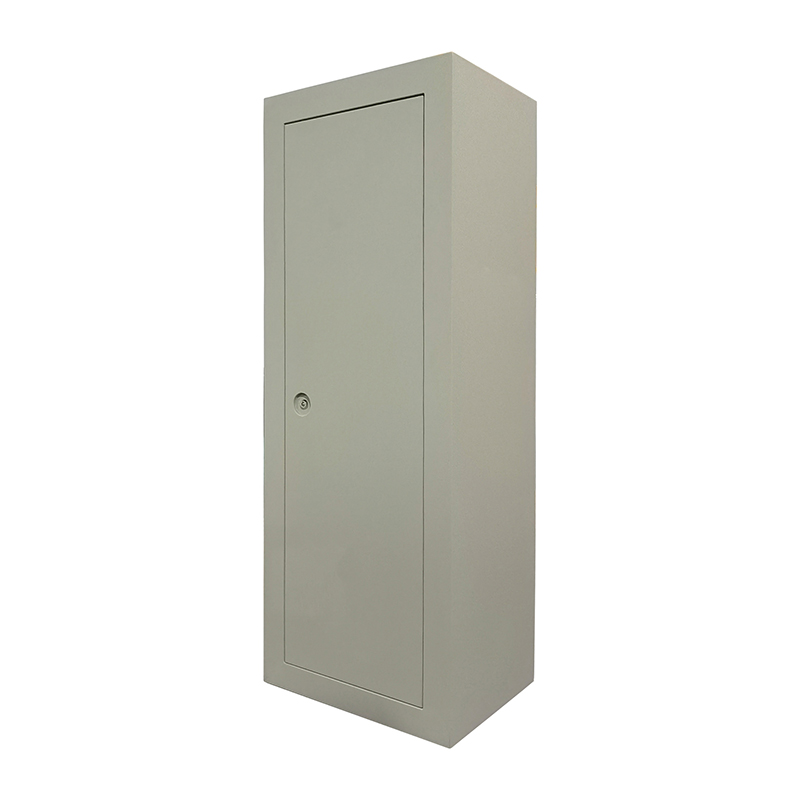 Custom WC0112 12-Gun Weld Gun Cabinet Suppliers, OEM/ODM Factory - Ningbo ArnostNingbo Arnostanley Electric Co., Ltd. is China WC0112 12-Gun Weld Gun Cabinet Suppliers and OEM Factory, details:Engineered for maximum s...View Product →
Sourcing Quick Access Rifle Safes for Your Own Brand
These three placement scenarios cover the most common quick access rifle safe layouts, and all three are part of the product family we manufacture in our two plants in Ningbo. We have produced security cabinets and gun safes in high volume since 2000, and the same production lines that build these models also run OEM and ODM projects for brands in Europe, North America, and Japan. If you are sourcing quick access rifle safes for your own brand, the decision criteria change slightly: you are no longer buying one safe, you are evaluating a supplier's steel quality, weld consistency, lock supply chain, and surface treatment line. Our sourcing guide for pistol safes demonstrates how two products at the same retail price can be completely different inside, and the same logic applies to rifle safes.
We also build fully custom configurations, so if your product plan requires a specific internal layout, lock type, or exterior finish, the dimensional range goes beyond what is listed in the catalog. For an overview of who we are and how we work, visit Ningbo Arnostanley Electric.
A quick access rifle safe is a compromise by design: the lock must be fast enough for you, and strong enough to slow down everyone else. Match the lock type to your tolerance for manual steps, verify the steel gauge and weld quality before you trust a brand, mount the safe where your body will actually be during the few seconds that matter, and test the opening motion repeatedly until it is automatic. A safe that you can open blindfolded is the only safe that truly counts as quick access.

-

Arnostanley Electric is committed to providing customers with home security OEM and ODM services, as well as comprehensive professional solutions.
-
Product List
Pistol Safe Lock Box Gun Cabinet Home Safe Safe Accessories Product Customization -
Contact Info.
+86-(0)574-6248 327+86-180 6720 2630Lucas_zhu@arnostanley.comNo.16 Beixing East Road, Yuyao City, Zhejiang Province, China -
Follow Us
Copyright © 2025 Ningbo Arnostanley Electric Co., Ltd. ALL Rights Reserved.
Custom Secure Storage Solutions Suppliers
