


 English
  中文简体
中文简体 
 Home / News / Industry News / Single Rifle Safe Buyer's Guide: Key Features, Sizing, and Security Tips
Industry News
Single Rifle Safe Buyer's Guide: Key Features, Sizing, and Security Tips
2026-08-26
By the time most people look for a single rifle safe, they already have one rifle and no workable place to store it. They might have a pistol lockbox, a gun case, or nothing. The natural next step is a small steel cabinet or a compact safe. The challenge is that "single rifle safe" is not a universal product spec. It can refer to a 12-gun cabinet, an in-wall unit, or even a large lockbox depending on the manufacturer. Instead of searching for a magic model, start with a few practical measurements and use those to filter the options.
Here is the simple conclusion: buy the smallest safe that comfortably fits one rifle with accessories, anchor it to the floor or wall, and choose a lock you will actually close and open under real conditions. Everything else is a matter of budget and preference.
Measure the Rifle Before You Measure the Safe
The most common sourcing mistake is comparing overall rifle length with the exterior height of the safe. Exterior height does not tell you what you can get through the door. A scoped hunting rifle may fit in a cabinet only if the interior depth is enough to clear the objective lens and the bolt handle.
| Rifle setup | Minimum interior length | Minimum interior depth | What usually gets overlooked |
|---|---|---|---|
| Bolt-action hunting rifle with scope | 44–48 in / 112–122 cm | 12–14 in / 30–36 cm | Scope turrets and bolt handle add clearance |
| AR-15 with collapsible stock | 32–36 in / 81–91 cm collapsed | 10–12 in / 25–30 cm | Forend width and vertical grip |
| Lever-action or pump shotgun | 40–46 in / 102–117 cm | 10–12 in / 25–30 cm | Buttstock length and sling mounts |
Use these numbers as a starting point, not a final answer. Then add at least one inch of clearance in every direction. If you plan to store the rifle with a two-point sling, a suppressor, or a bipod attached, measure with those items installed.
- Measure with the stock fully extended; an adjustable stock can be collapsed for storage, but check whether you are willing to store the rifle that way.
- Measure the widest point of the forend, scope, or front sight; this often decides required interior width.
- Check the door opening, not only the interior volume. Some safes with large interior height have a smaller door and are difficult to load.
- If the safe comes with removable shelves or foam blocks, measure the usable space after removing them.
This may sound tedious, but it prevents the most common outcome: a new safe that is tall enough on paper and too small in practice.
Choose a Lock Type You Can Live With
A lock is the first thing that separates a safe from a cabinet. For a single rifle safe, three lock types dominate: biometric, digital keypad, and mechanical combination.
Biometric locks are fast; they work well when you need quick access in a defensive situation. Keep the sensor clean and check the backup key, because fingerprint readers can fail if a finger is damp or calloused. Digital keypads are predictable and quiet, but they run on batteries. Set a reminder to replace them, and store a backup key outside the safe. Mechanical combination locks need no batteries and are the most dependable long-term option, but practice opening them in the dark; dials take longer than you think.
Whatever you choose, the lock should also defeat child access. A rifle safe with a four-year-old at home is not a storage box; it is a safety device. The lock you pick should be simple enough for you to operate under stress and robust enough that someone without the code or key cannot open it.
Anchoring Is What Makes It a Rifle Safe
No matter how thick the steel is, a safe that can be tipped and carried is a lockbox. Most small gun cabinets are light enough for two people to carry out of a house. That is why the anchor points matter more than the lock on the door.
Check the back and bottom of the unit for pre-drilled holes. Use concrete anchors for a garage floor and lag screws into wall studs for a closet or bedroom. If the safe sits on a wooden floor, bolt it through the subfloor. For an in-wall installation, attach the steel frame to the surrounding studs; drywall alone will not hold it.
Also look at the door and hinges. A single-wall thin cabinet with a simple cam lock can be popped with a pry bar. A better unit has a reinforced door, a thicker steel body, and internal hinges. You do not need a bank vault for one rifle, but the safe should be harder to break into than the nearest glass window.
Fire Protection and Moisture Control Need a Plan
A cabinet protects against unauthorized access; a fireproof safe also protects against fire. For a one-rifle owner, the decision usually comes down to where the safe is located and what you are willing to spend. A fire-rated unit contains a layer of insulating material and is tested to keep interior temperatures below a threshold for a certain time. If you do not choose a fire-rated unit, the rifle may be secure from theft but not from a nearby fire.
Moisture is just as destructive. A rifle can show rust within days in a humid garage or during summer months in a closed closet. A rechargeable dehumidifier inside the safe will absorb moisture and keep the interior dry. Even in a dry climate, open the safe and inspect the rifle occasionally so small problems are caught early.
Placement Decides Which Format Makes Sense
The safest location is the one you will actually use. If the safe is installed behind a stack of boxes, you will leave the door open for convenience. Choose a location that is private but reachable.
Vertical Cabinet in a Closet
A compact vertical cabinet works well in a bedroom or hallway closet. It takes up little floor space and can be bolted to the back wall. It is also easy to open on a regular basis.
In-Wall Safe
An in-wall safe is the best way to keep a single rifle out of sight. It uses the stud cavity between two wall supports, so it does not eat into floor space. The 1100mm in-wall gun safe from the manufacturer is a useful example: 1100mm in-wall gun safe stores a rifle vertically behind a flush door. Before choosing this route, verify that the wall cavity is deep enough and that there are no electrical wires, pipes, or critical insulation behind the intended location.
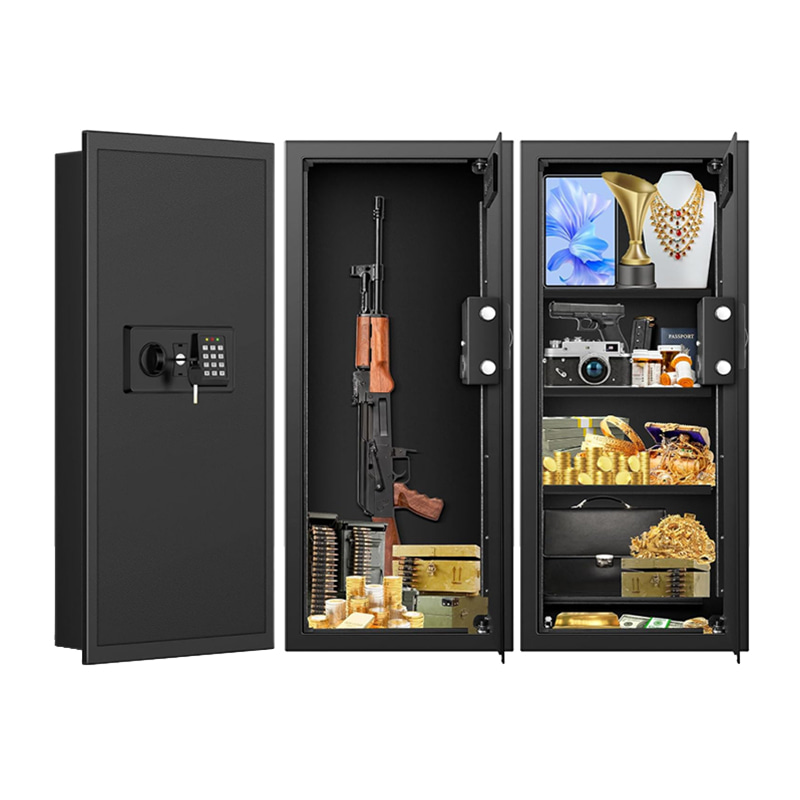 Custom WS0410 1100mm In-Wall Gun Safe Suppliers, OEM/ODM Factory - Ningbo ArnostNingbo Arnostanley Electric Co., Ltd. is China WS0410 1100mm In-Wall Gun Safe Suppliers and OEM Factory, details:The main features of the...View Product →
Under a Workbench or Counter
If you do not want a tall cabinet, a low-profile unit can sit under a workbench. This works well in a garage or hobby room, but the location should still be out of plain view to reduce the chance of casual theft.
Capacity: One Rifle Today, Room to Grow Later
A single rifle safe does not have to limit you to one rifle forever. Many buyers choose a slightly larger model so they can add a second rifle or store accessories in the same footprint. The tradeoff is that larger units are heavier, harder to anchor, and more expensive.
If your priority is keeping the purchase simple, a welded steel cabinet like the 12-gun weld gun cabinet gives you a secure shell with enough space for one rifle and several shelves. If fire protection is more important, the 16-gun fireproof gun safe is a practical step up because it combines an insulated body with the possibility of storing more than one firearm later. Both are still compact enough to belong in the "single rifle safe" conversation, even though their official capacities are larger.
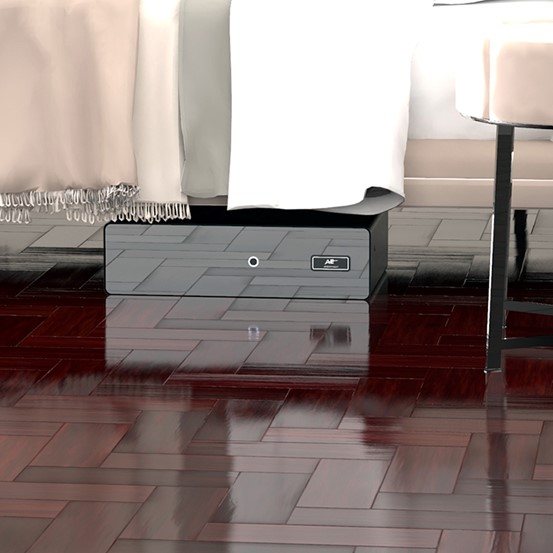 Custom FS0116 16-Gun Fireproof Gun Safe Suppliers, OEM/ODM Factory - Ningbo ArnoNingbo Arnostanley Electric Co., Ltd. is China FS0116 16-Gun Fireproof Gun Safe Suppliers and OEM Factory, details:Secure your firearms a...View Product →
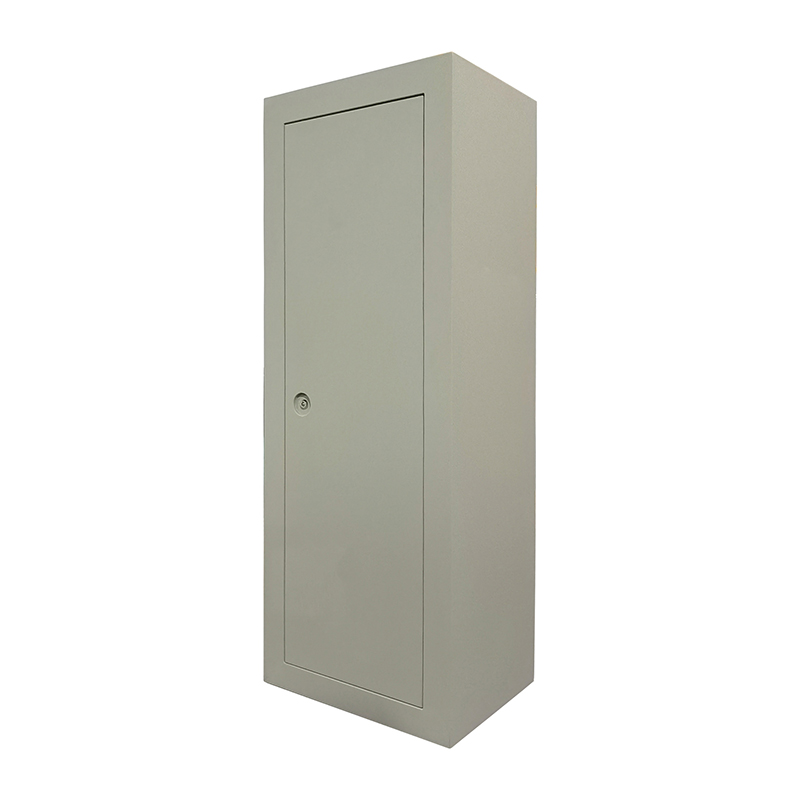 Custom WC0112 12-Gun Weld Gun Cabinet Suppliers, OEM/ODM Factory - Ningbo ArnostNingbo Arnostanley Electric Co., Ltd. is China WC0112 12-Gun Weld Gun Cabinet Suppliers and OEM Factory, details:Engineered for maximum s...View Product →
The Practical Bottom Line
A single rifle safe works when the size, lock, anchoring, and environment are correct. Start with the rifle itself: measure the overall length, the widest accessory, and the available depth in the wall or closet. Then choose a lock you will actually use and mount the safe to the structure. Decide whether fire and humidity protection are worth the extra cost. Once those points are settled, the safe you pick will do its job without turning your hallway into a storage room.
-

Arnostanley Electric is committed to providing customers with home security OEM and ODM services, as well as comprehensive professional solutions.
-
Product List
Pistol Safe Lock Box Gun Cabinet Home Safe Safe Accessories Product Customization -
Contact Info.
+86-(0)574-6248 327+86-180 6720 2630Lucas_zhu@arnostanley.comNo.16 Beixing East Road, Yuyao City, Zhejiang Province, China -
Follow Us
Copyright © 2025 Ningbo Arnostanley Electric Co., Ltd. ALL Rights Reserved.
Custom Secure Storage Solutions Suppliers
