


 English
  中文简体
中文简体 
 Home / News / Industry News / Shotgun Safe Sizing: Capacity, Fire Ratings, Lock Choice, and Real Buying Factors
Industry News
Shotgun Safe Sizing: Capacity, Fire Ratings, Lock Choice, and Real Buying Factors
2026-09-09
A 24-gun safe looks like the smartest purchase in the showroom. It stops looking that way on the day you bring twelve shotguns home. Two have 32-inch barrels. Three carry optics. One is an over-under that needs more vertical room than a standard slot provides. By the time you finish wedging them in, the door barely closes.
Here is the short answer: the right shotgun safe is not the biggest model you can afford. It is the one where the rated capacity matches how you store long guns, the fire protection matches the value of your collection and the climate you live in, and the lock system matches how quickly you need access in an emergency. Each of those trade-offs has a direct effect on how useful the safe will be after the first month of ownership.
Below, we cover those trade-offs in the order they should guide your purchase decision.
Capacity Planning: How Many Shotguns Fit in a "16-Gun Safe"?
Manufacturer capacity numbers are based on a standardized rifle with the scope removed and a traditional stock profile. Shotguns do not fit that template. A 26-inch field gun may slide in easily, but a 30-inch turkey gun with a long choke tube will need more clearance. Add an optic or a side-mounted red dot, and the effective capacity drops by roughly 20 to 30 percent.
Use this rule of thumb: buy a safe rated for at least 50 percent more guns than you own today. A shooter who owns six shotguns should look at a 12-gun cabinet. A collector with fifteen long guns needs a 24-gun or larger model.
| Model | Rated gun capacity | Realistic shotgun fit | Protection type |
|---|---|---|---|
| FS0116 | 16 | 10-11 long guns | Fireproof |
| FS0124 | 24 | 16-18 long guns | Fireproof |
| FS0136 | 36 | 24-28 long guns | Fireproof |
| FS0154 | 54 | 38-45 long guns | Fireproof |
| WC0112 | 12 | 8-9 long guns | Welded steel |
| WC0118 | 18 | 13-15 long guns | Welded steel |
The interior layout matters as much as the headcount. Look for padded barrel rests rather than painted steel slots. A rack that supports both the barrel and the receiver distributes weight evenly, which is especially important for walnut stocks. A horizontal rack can also turn dead space near the bottom of a deep cabinet into usable storage.
Fire Protection: Fireproof vs Welded Steel
A fireproof gun safe is not simply a steel box with a thick lock. It is a layered structure: an outer steel shell, a thermal barrier that expands when heated, and a door seal that swells to block heat and smoke. The FS series in our line is built exactly this way, with heavy-gauge steel and fitted thermal panels chosen to stop internal temperatures from climbing into the range that damages wood and metal.
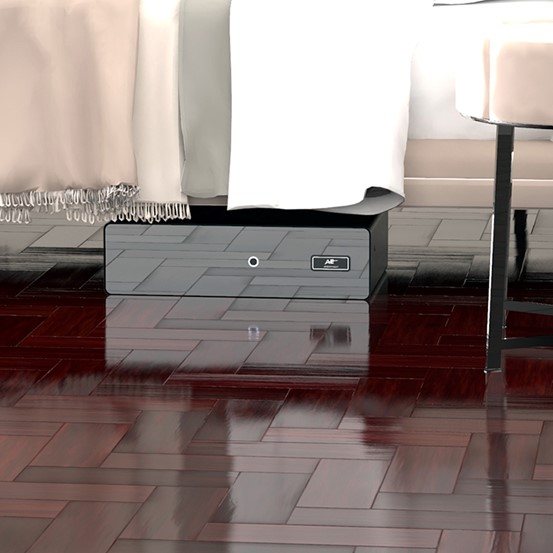 Fireproof Gun Safe for 16 Guns with Thermal BarrierThe FS0116 combines heavy-gauge steel and thermal panels to withstand 1200°F for 45 minutes, with a reinforced door and 1.5-inch bolts to protect firearms from fire and unauthorized entry.View Product →
A welded gun cabinet - the WC series - takes another approach. It uses a continuous welded frame designed to resist prying and brute-force entry, but the interior is largely air with no thermal barrier. It is not fireproof, and it is not sold as fireproof. If you need protection against structure fire, start with an FS model and move up in capacity as your collection grows.
When you read a fire rating, look for two specific numbers: a temperature and a duration. A legitimate rating will state a threshold such as 1200°F for 30 minutes or a comparable time-temperature curve. If the label only says "fireproof" with no temperature figure, treat it with suspicion. For wood-stocked shotguns the functional damage threshold is even lower: stocks begin to scorch around 300°F, far below the temperature reached in most house fires. Fire protection is not an optional upgrade for anyone living in a wildfire-prone region, or for anyone who stores a safe near a furnace, water heater, or electrical panel.
Lock Choice: Speed vs Cut Resistance
A shotgun safe has two jobs: keep unauthorized people out of your guns and give you fast access when a threat is real. Those jobs pull in opposite directions, so the lock decision has to come after you define the primary use case.
- Biometric locks are the fastest to open. A quality module uses capacitive sensing rather than optical image matching, so it reads the ridges of your skin instead of a printed photo. In real-world use, dirty hands and cold weather are the two most common causes of rejected fingerprints.
- Digital keypads are more predictable day to day. No fingerprint false rejects, but you need a battery source and a hidden backup key. A keypad also becomes useful when a guest or family member needs access without enrolling a new print.
- Key locks are the most durable and the hardest to attack electronically, but a single physical key under time pressure is easy to drop or misplace.
If the shotgun is your home defense weapon, a quick-access lock is the standard choice. If the safe holds an inherited collection that rarely leaves the cabinet, prioritize the steel, the fire lining, and a mechanical key or mechanical combination lock. Whatever you pick, test the mechanism with your own hand before deciding. A lock is the one component that will either serve you or fail you in the moment it matters.
Shotgun-Specific Storage: Racks, Humidity, and Cleaning
Shotguns are long, heavy, and more prone to surface rust than a typical rifle stored in a dry cabinet. Three accessories solve the problems that show up in everyday use.
Padded gun racks keep the weight off the barrel
A horizontal rifle and shotgun rack - like the GR0310 - holds the barrel and receiver in soft cradles, spreading the weight so no single contact point bears the whole mass. It is especially useful inside deeper cabinets where vertical slots run out of room. The rack converts bottom space into practical storage rather than a dead zone.
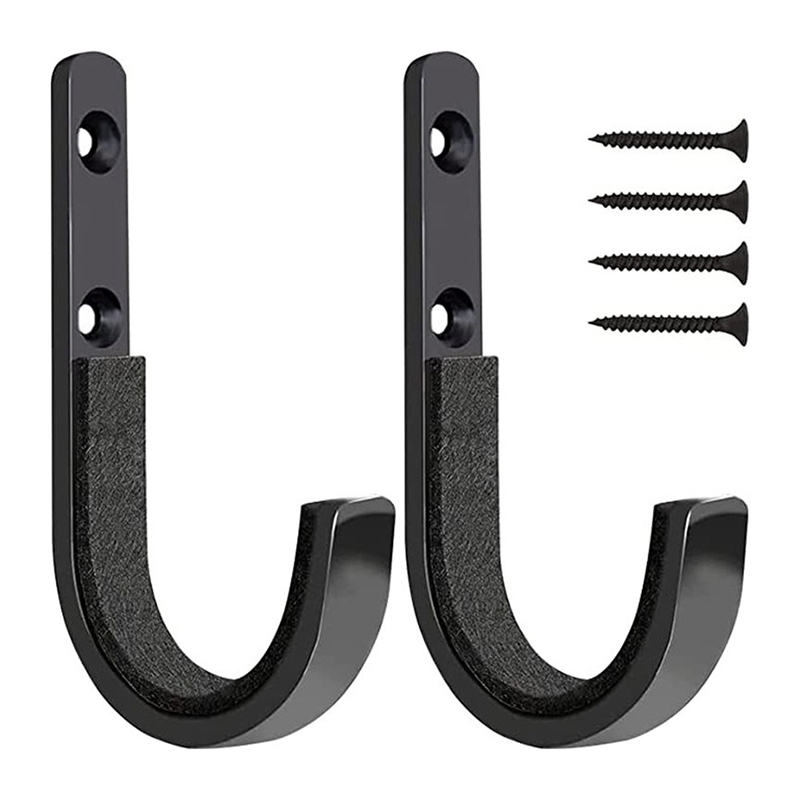 Horizontal Rack for Rifles and Shotguns in Deep CabinetsThe GR0310 holds guns in soft cradles, distributing weight to avoid pressure points, and converts unused bottom space in deeper cabinets into practical storage for rifles and shotguns.View Product →
A dehumidifier protects blued steel and wood
Corrosion does not require visible water to begin. It starts when humid air inside the cabinet reaches the dew point and moisture condenses on the gun. A rechargeable dehumidifier with a motion-sensor LED - like the RD0110 - performs two jobs at once: it removes moisture from the sealed cabinet and gives you light when you open the door. In a coastal or humid climate, a desiccant bag is a practical backup.
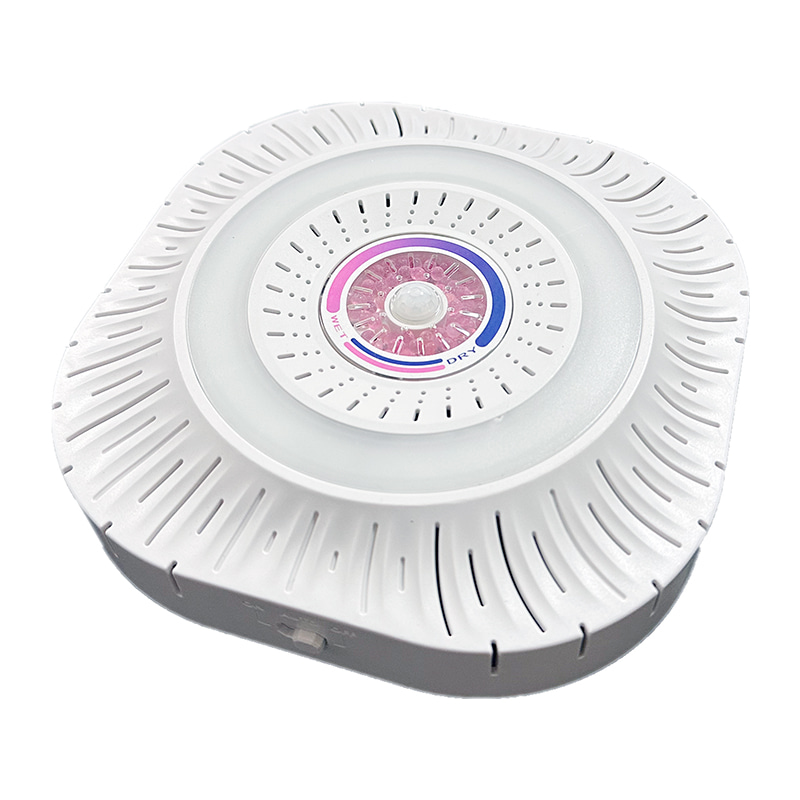 Rechargeable Dehumidifier with Motion-Activated LED LightThe RD0110 removes moisture from sealed cabinets to prevent corrosion and lights up the interior via motion sensor, with screw mounting or magnetic attachment for easy placement.View Product →
A dedicated cleaning kit saves time
Transferring bore brushes, patches, and solvent from a general-purpose bag means a second trip every time you run a cleaning session. A dedicated gun cleaning kit stored with the cabinet keeps the routine simple and makes it more likely you will actually do the maintenance. It is a small detail, but it compounds over the life of the gun.
Sourcing a Shotgun Safe for Your Brand: What to Look For
If you are buying shotgun safes to resell under your own label, the capacity chart is not where you should spend your time. The manufacturing process decides whether the second cabinet you receive matches the tolerances of the first. Laser cutting, CNC bending, laser welding, in-house phosphating, and dedicated paint lines all contribute to a consistent final product. When a factory outsources surface treatment or uses manual grinding to clean weld seams, that variation shows up on the door, in the hinge alignment, and in the coating quality.
Two safes can carry the same price tag and be completely different products once you look at the weld bead consistency, the lock mounting plate, and the finish. That gap is the core issue in this category, and it is the subject of our sourcing guide, which walks through the exact manufacturing points to inspect before you commit to a supplier.
For custom projects, a customization page lets you define interior layouts, lock types, and capacity increments. A factory with in-house engineering and a tooling shop can move from a product drawing to a finished prototype more quickly, which matters significantly if you have a seasonal product launch. Ask for sample lead time and production lead time before negotiating price, because delivery consistency is often the differentiator between a smooth selling season and a costly one.

-

Arnostanley Electric is committed to providing customers with home security OEM and ODM services, as well as comprehensive professional solutions.
-
Product List
Pistol Safe Lock Box Gun Cabinet Home Safe Safe Accessories Product Customization -
Contact Info.
+86-(0)574-6248 327+86-180 6720 2630Lucas_zhu@arnostanley.comNo.16 Beixing East Road, Yuyao City, Zhejiang Province, China -
Follow Us
Copyright © 2025 Ningbo Arnostanley Electric Co., Ltd. ALL Rights Reserved.
Custom Secure Storage Solutions Suppliers
