


 English
  中文简体
中文简体 
 Home / News / Industry News / Smart WiFi Gun Safe Weight Guide: Understanding Different Sizes, Materials, and Capacities
Industry News
Smart WiFi Gun Safe Weight Guide: Understanding Different Sizes, Materials, and Capacities
2026-07-22
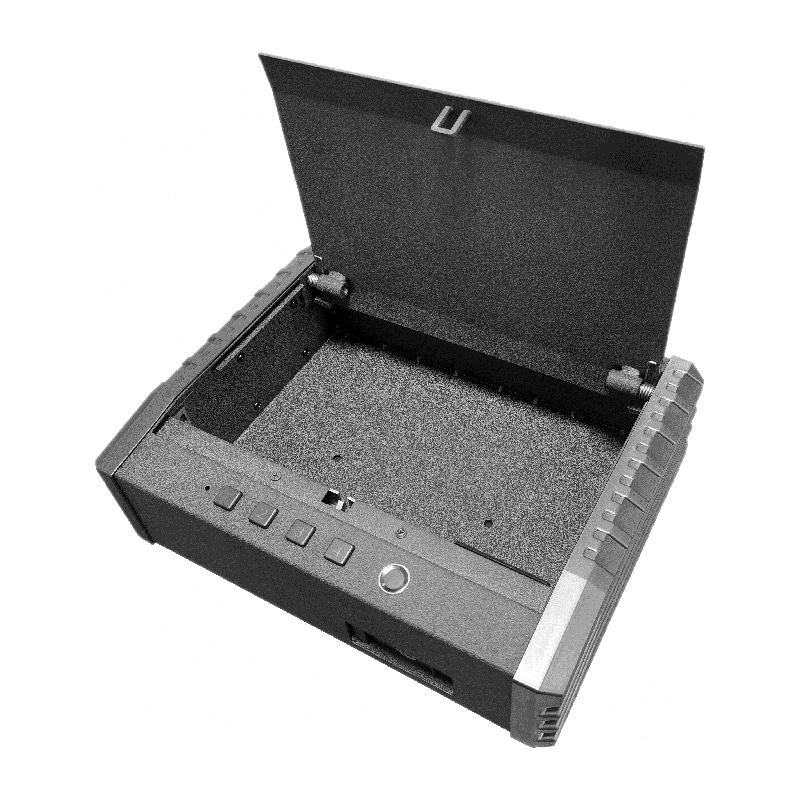
A smart WiFi gun safe generally weighs somewhere between 20 pounds for a compact handgun-sized unit and 150 pounds or more for a larger cabinet-style safe built to hold multiple long guns. The connectivity components themselves, the circuit board, WiFi module, and battery pack, add only a small amount to the total weight; the bulk of the figure comes from the steel body, door thickness, and locking bolt hardware that provide the safe's physical resistance to prying and forced entry.
Typical Weight Ranges by Safe Category
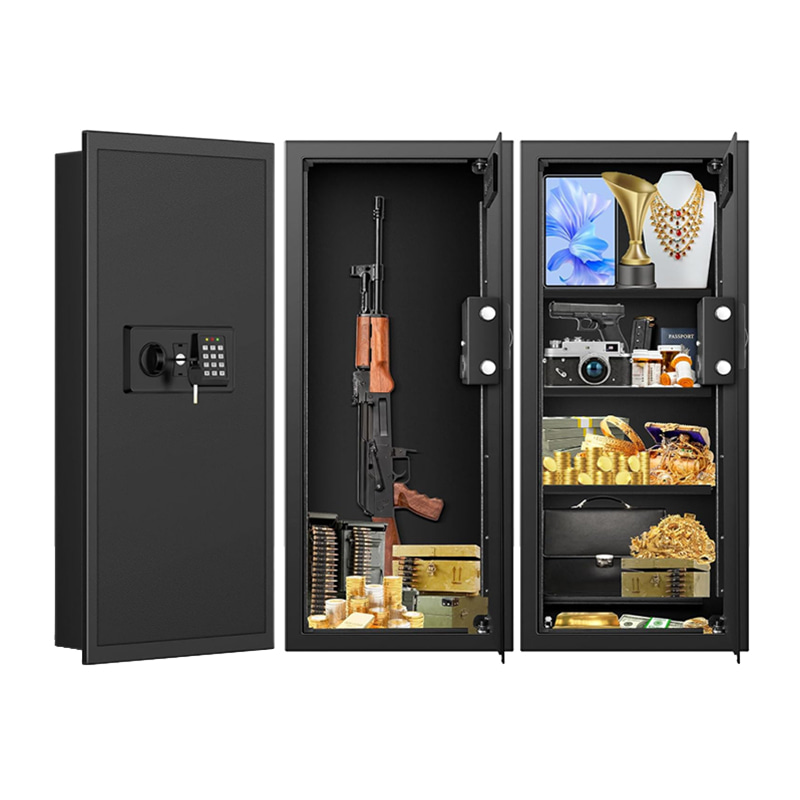
Smart gun safes span a considerable size range, from small nightstand or drawer units meant for one or two handguns to standing cabinet safes meant to secure several rifles or shotguns along with ammunition and documents. Weight scales with that size difference fairly directly, since a larger interior cavity requires a correspondingly larger steel shell and heavier door assembly to keep the structure rigid.
| Safe Category | Typical Capacity | Approximate Weight |
|---|---|---|
| Compact drawer or nightstand safe | 1 to 2 handguns | 20 to 35 lbs |
| Portable lockbox style safe | 1 to 3 handguns | 10 to 25 lbs |
| Mid-size cabinet safe | Several handguns and small valuables | 40 to 80 lbs |
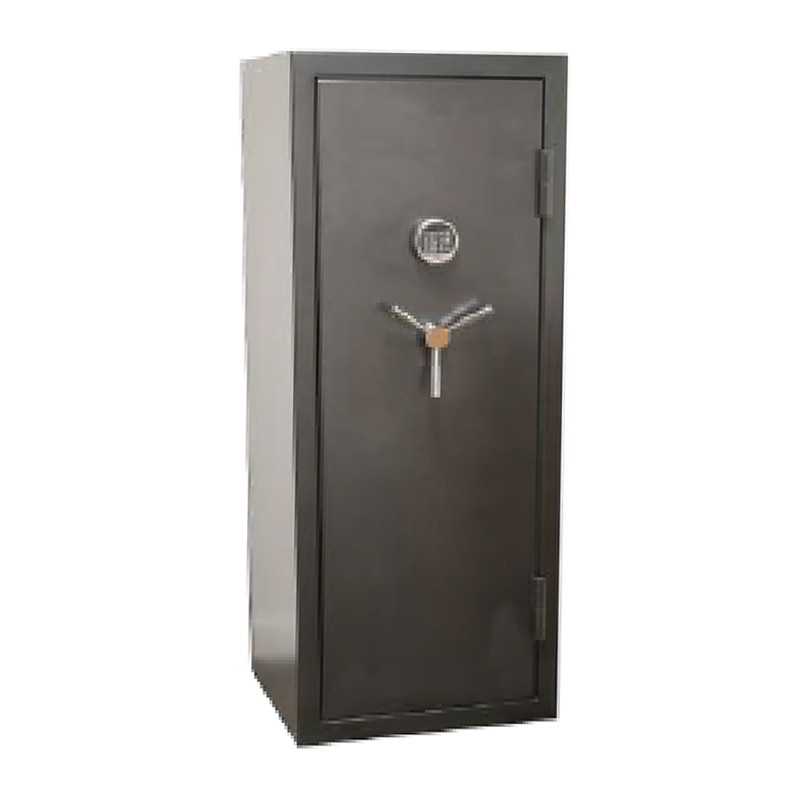
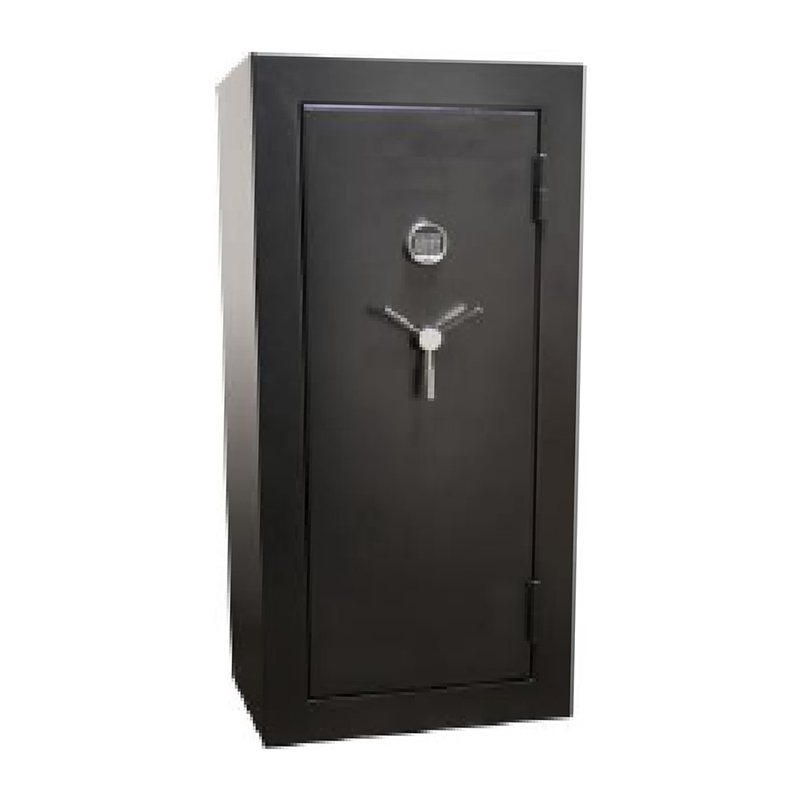
| Standing long gun safe | 4 or more rifles or shotguns | 150 to 300 lbs or more |
Steel Gauge and Its Effect on Overall Weight
The gauge of steel used in the body and door of a safe has a direct bearing on how much the finished unit weighs, since a lower gauge number indicates thicker, heavier steel plate. Quick-access handgun safes often use body steel in the range of 14 to 16 gauge paired with a somewhat thicker door, prioritizing a manageable weight and compact footprint that still resists casual prying, while larger long gun safes frequently step up to 10 or 12 gauge steel for the body and a considerably thicker door plate, sometimes a quarter inch or more, to resist sustained forced entry attempts with tools such as a pry bar or angle grinder.
This thickness difference explains why two safes with a similar exterior footprint can carry noticeably different weights; a lighter-gauge model built primarily for quick access and portability will weigh less than a heavier-gauge model of similar size built with forced-entry resistance as a higher priority.
How the Smart Components Factor Into Total Weight
Circuit Board and WiFi Module
The electronic components responsible for WiFi connectivity, biometric scanning, and app communication are compact and lightweight compared with the steel body, typically adding only a pound or two to the total figure. These components are usually mounted inside the door panel near the keypad or fingerprint sensor, a placement chosen for wiring convenience rather than for any meaningful weight distribution purpose.
Battery Pack and Backup Power Supply
Battery compartments holding four to eight standard alkaline cells, or occasionally a rechargeable lithium pack, add a modest amount of weight as well, generally under a pound once the batteries themselves are installed. Because these components sit near the front of the safe rather than distributed through the steel shell, they have a negligible effect on how the safe balances when lifted or moved, and the overall weight figure for a connected safe stays close to what an equivalent non-connected model of the same steel gauge and size would weigh.
Why Weight Matters for Installation and Anchoring
A safe's weight plays directly into how it needs to be secured within a home, since a lighter unit under roughly 50 pounds can often be carried off entirely by an intruder if it is not bolted down, regardless of how strong its locking mechanism might be. Many compact and mid-size smart safes include pre-drilled anchor holes in the base specifically so the unit can be bolted to a floor or wall stud, addressing this vulnerability without relying on sheer mass alone to keep the safe in place.
Heavier standing safes in the 150 pound and up range present a different practical concern, since moving or repositioning them after installation generally requires a hand truck, appliance dolly, or multiple people, and floor loading becomes a relevant consideration in upper-story installations, particularly in older homes where floor joists were not necessarily designed with a several-hundred-pound concentrated load in mind.
Matching Weight to Common Use Cases
A lighter portable safe in the 10 to 25 pound range suits travelers who want to secure a handgun in a hotel room or vehicle, since the reduced weight allows the unit to be carried in a bag or stored under a seat without becoming an inconvenience, though this portability comes with the tradeoff of easier removal by an intruder if it is not cabled or anchored to a fixed point such as a vehicle seat frame.
A mid-weight bedside safe in the 20 to 40 pound range is a common choice for households wanting quick nighttime access to a defensive firearm, balancing a weight light enough to reposition occasionally with enough mass that casual tampering is discouraged, especially once bolted to a nightstand shelf or closet floor. Households consolidating several long guns into a single storage point typically accept the considerably heavier weight of a standing cabinet safe as a reasonable tradeoff, since the added mass and thicker steel walls contribute meaningfully to resisting both forced entry and outright removal from the premises.
-

Arnostanley Electric is committed to providing customers with home security OEM and ODM services, as well as comprehensive professional solutions.
-
Product List
Pistol Safe Lock Box Gun Cabinet Home Safe Safe Accessories Product Customization -
Contact Info.
+86-(0)574-6248 327+86-180 6720 2630Lucas_zhu@arnostanley.comNo.16 Beixing East Road, Yuyao City, Zhejiang Province, China -
Follow Us
Copyright © 2025 Ningbo Arnostanley Electric Co., Ltd. ALL Rights Reserved.
Custom Secure Storage Solutions Suppliers
